
Overview: The PR landscape is rapidly evolving, shaped by AI, digital media and shifting audience expectations. In 2026, success in public relations depends on hyperpersonalization, authentic storytelling, data-driven strategies and proactive crisis management, all supported by integrated PR and marketing efforts. See how Lukas Partners helps clients navigate these emerging PR trends.
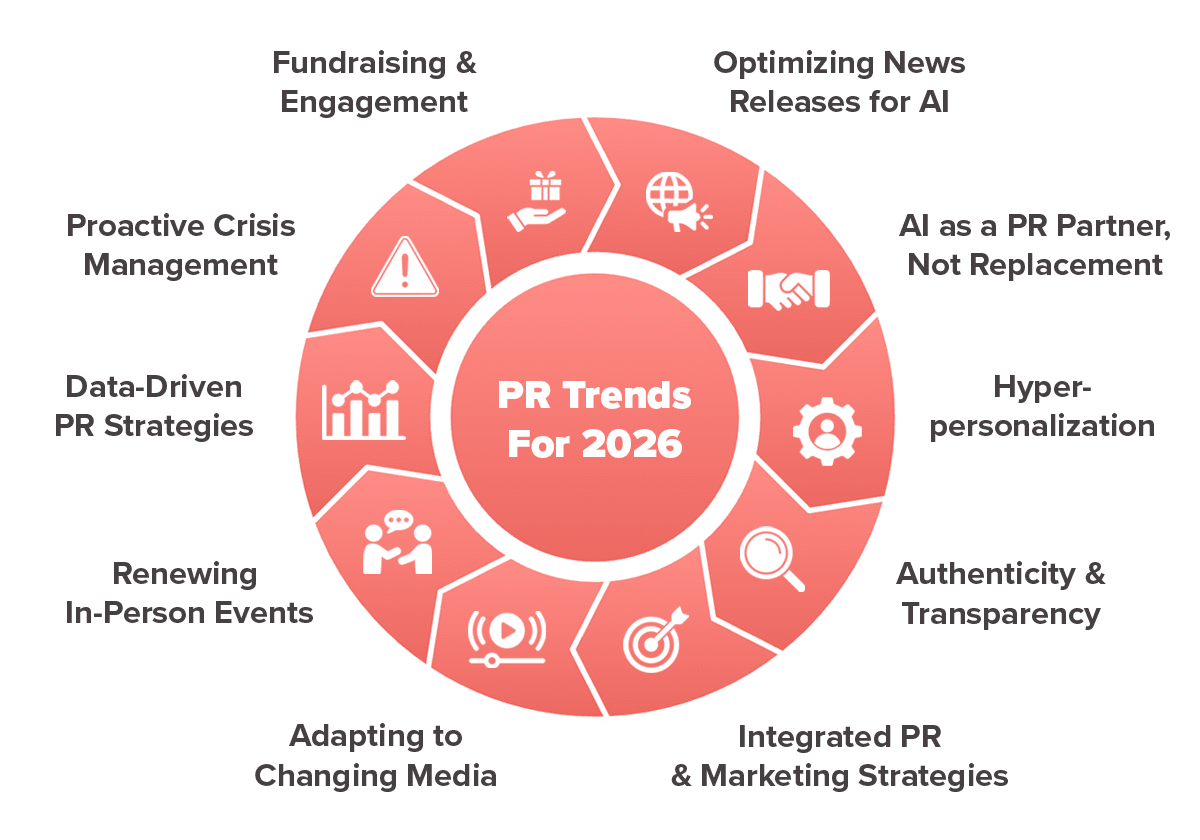
The public relations industry is undergoing one of the most significant transformations in decades. AI, the changing media landscape and new audience behaviors have reshaped how organizations communicate and build trust. At Lukas Partners, we help our clients adapt to these new trends in public relations, while staying true to the fundamentals of authentic, relationship-driven PR. Here are the top PR industry trends that we predict will shape 2026.
- Optimizing News Releases for AI & LLMs
- AI as a PR Partner, Not a Replacement
- Hyperpersonalization & Relationship Building
- Radical Authenticity & Transparency
- Integrated PR & Marketing Strategies
- Navigating a Changing Media Landscape
- Renewed Value of In-Person Events
- Data-Driven PR Strategies
- Proactive Crisis Management
- Fundraising & Donor Engagement
Optimizing News Releases for AI & LLMs
The way people consume news has changed as large language models (LLMs), such as ChatGPT, become part of daily life. PR experts can use a generative engine optimization (GEO) strategy to structure news releases, making them easily recognized by LLMs and other AI tools. When news releases are structured with both human readers and AI systems in mind, organizations can increase their chances of being cited in AI responses, thereby enhancing brand awareness.
A few PR best practices for writing news releases for AI include:
These PR challenges sound familiar?
Let's explore how strategic communication can move your business forward.
Schedule a Consultation- Crafting keyword-rich headlines and subheadlines.
- Leading with the “who, what, when, where, why.”
- Using headers, bullet points and concise paragraphs.
- Adding Q&As with common questions from your audience.
- Linking to authoritative sources for added credibility.
AI as a PR Partner, Not a Replacement
Using AI tools for PR is now mainstream, with 77% of PR professionals using them and 59% predicting AI will grow in importance over the next five years.
Lukas Partners Senior Communications Strategist, Kristen Crawford, says on AI,
“The importance of AI in PR will only grow as PR practitioners seek to streamline time-consuming tasks, such as researching timely industry trends and compiling reports to track campaign measurement.”
From tailoring messaging for different audiences to monitoring sentiment, AI offers tremendous opportunities for PR professionals. But AI should always be used as a strategic partner and thought starter, not a replacement because current public relations trends are still rooted in trust, relationships and authenticity that you can’t get from AI alone.
Hyperpersonalization & Relationship Building
Personalization has long been a PR best practice, but today’s communications landscape demands more. Hyperpersonalization uses real-time data, AI and predictive analytics to tailor outreach to the individual level, rather than by segment. This shift allows PR professionals to anticipate needs, deliver more relevant content and build stronger relationships with their audience. For our client FNTS, we sent personalized monthly marketing emails and LinkedIn InMail to specific technology audiences, which resulted in a 200% increase in impressions, 96% increase in followers and 90% more clicks.
Hyperpersonalized PR is also the expectation for media relations. In 2026, you should be going beyond using a journalist’s name or referencing a past article in your pitch and instead deeply understand their current interests, tone and audience to position your story as truly valuable.
According to Kristen,
“Connecting with reporters on a one-on-one basis lays the groundwork for a mutually beneficial relationship. PR practitioners can be a valuable resource by connecting reporters with PR clients who are industry thought leaders.”
To put hyperpersonalization with journalists into practice:
- Use AI and analytics to identify topics and trends each journalist cares about.
- Reference recent work and preferred formats to align your pitch with their style and audience.
- Refine outreach in real time using engagement data like opens, clicks and responses.
- Offer unique value, such as access to industry experts or exclusive data.
- Prioritize relationship-building, treating touchpoints as part of an ongoing partnership.
Radical Authenticity & Transparency
With consumer trust continuing to decline, authenticity has evolved from a brand differentiator into a necessity in any modern PR strategy. Audiences are increasingly skeptical of marketing claims and expect proof of purpose and integrity from the organizations they support. In 2026, brands that communicate with transparency by openly sharing data, business practices and even challenges, will earn stronger loyalty and engagement. Acknowledging missteps and demonstrating accountability further reinforces this trust.
Asked about the importance of communicating missteps, Kristen says,
“By addressing issues early and honestly, organizational leaders can maintain trust and prevent what could lead to larger reputational issues.”
Integrated PR & Marketing Strategies
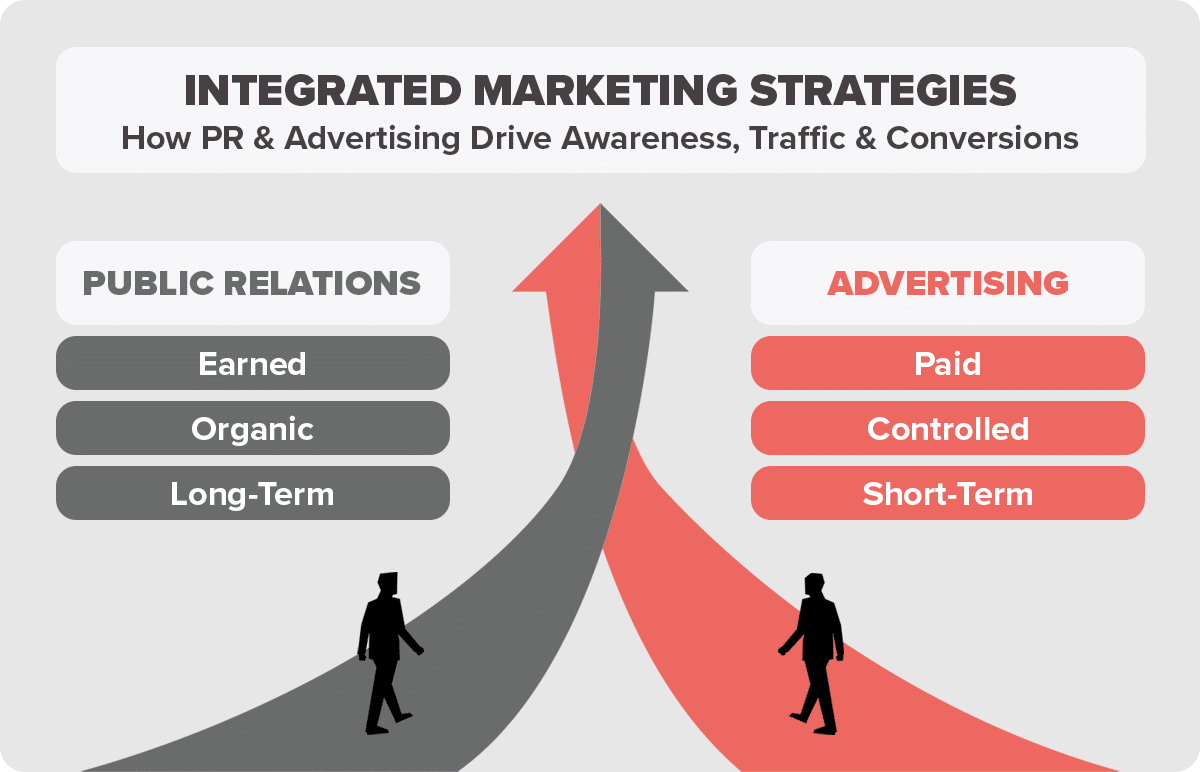
The line between PR and marketing will continue to blur this year. Earned media coverage will support SEO by contributing to higher visibility in traditional search and AI results. It’ll build brand awareness and ROI on PR-driven advertising efforts. In other words, when used strategically, PR will amplify impact across all channels in 2026 — including social, email and beyond.
And original thought leadership — through blogs, LinkedIn posts or opinion pieces — will likely be one of the best ways to leverage a multi-modal marketing strategy to help maintain credibility and brand reputation in this AI age.
Aaron Mackel, Hurrdat’s Digital Strategy Director, comments,
“The integration of marketing and PR creates positive conversation that sticks with your audience, leading to more brand recall as well as mentions around your brand that help to do both of these things — create a memorable brand and spark conversations that lead to the brand being discussed across the web.”
Navigating a Changing Media Landscape
Securing traditional media coverage via print, television and radio is more challenging than ever, with understaffed newsrooms and lower reporter response rates to email pitches. To help clients adapt, we continually explore new ways to reach target audiences.
- Identify and pitch to digital-first outlets and independent journalists on platforms such as Substack, podcasts and social media.
- Leverage social channels and communities, such as Facebook Groups to find new topics and pitch to journalists.
- Monitor online platforms and daily newsletters that share timely opportunities to provide thought leadership to reporters on a specific topic.
- Partner with micro-influencers and micro-media outlets to build trust and authenticity with their highly engaged, niche audiences.
For our client Terra Gaucha Brazilian Steakhouse, we partnered with local foodie groups and social media influencers to authentically share their dining experiences at the Omaha grand opening. This new media PR strategy generated more organic reach than coverage from traditional news media.
On working with influencers at Lukas Partners, Kristen explains,
“We carefully vet influencers to ensure their values, audiences and content style align naturally with the brand. While we provide them with background information on our client, we encourage them to share their authentic experiences and perspectives in their own voice. This approach not only ensures credibility with their followers but also fosters trust between our team and the influencer.”
Renewed Value of In-Person Events
In an increasingly digital world, in-person experiences are regaining importance as a way to foster authentic connections, trust and engagement. While virtual communication remains essential, nothing replaces the energy of face-to-face interaction, where conversations flow naturally and feedback is immediate. Organizations are realizing that live events can humanize brands and build lasting loyalty in 2026.
As stated by Kristen,
“People are looking for genuine human connection. In-person experiences elicit positive emotions and provide a sense of shared community and belonging that virtual engagements can’t fully capture. For brands, these moments allow audiences to engage with their story in a tangible, memorable way. The lasting impressions formed through real-world experiences often deepen brand loyalty.”
Lukas Partners organized in-person events for Museum of Nebraska Art’s groundbreaking, Heartwood Preserve’s seasonal events and AIM Institute’s TRIO Day — each generating dozens of media placements, audience reach in the millions and total publicity value between $780,000 and $44 million.
Data-Driven PR Strategies
Recently, data has redefined how PR success is measured. Rather than relying solely on impressions, AVE or other vanity metrics, PR agencies are turning to impact‑based analytics that track how communications influence awareness, trust and growth. Modern tools now allow teams to measure not just reach, but resonance, revealing which messages drive engagement and credibility. Insights like brand searches, inbound leads and SEO lift can help you refine storytelling, demonstrate ROI and directly link PR strategy to organizational impact in the upcoming year.
Hurrdat’s Data Science Director, Ross Allen, further explains,
“Impressions, AVE, and other metrics are still important, but the most valuable analytics now and in 2026 track the entire journey from awareness to action — engagement depth, sentiment shifts, share of voice in real conversations and most critically, attribution to business outcomes like purchase decisions or brand perception shifts.
This data becomes your storytelling compass: it reveals which narratives truly resonate, which channels your audience trusts and which messages drive action versus just applause. The best PR and marketing strategists will treat this as a continuous feedback loop by testing, measuring, learning and pivoting, using these insights to refine approaches based on what actually moves the needle, not what just gets noticed.”
Proactive Crisis Management
Reputational risks can escalate in seconds with today’s instant scrutiny, misinformation and polarization. That’s why the future of PR is proactive crisis management goes beyond monitoring sentiment — it should be about anticipating challenges, building brand resilience and fostering trust before issues arise. Organizations should begin by developing a comprehensive crisis communication plan that identifies potential risks and response protocols, supported by clear brand voice and messaging guidelines to ensure consistency and credibility across all channels. Equally important is creating a culture of preparedness and transparency where teams are media trained, informed and ready to respond in any situation.
To protect brand reputation before crises happen, we advise clients to:
- Develop and maintain a proactive crisis management plan that’s regularly reviewed and tested.
- Monitor brand mentions using tools such as Google Alerts and social listening platforms like Sprout Social to stay aware of emerging narratives.
- Use AI to track sentiment and reputation trends over time to anticipate shifts in public perception and adjust messaging accordingly.
- Engage in meaningful stakeholder conversations that reinforce transparency, credibility and alignment with organizational values.
- Provide media training for spokespeople and leadership teams so they are ready and confident in high-pressure scenarios.
- Regularly audit owned and earned media to identify inaccuracies, outdated information or messaging gaps.
- Prioritize ethical decision-making in all communications to sustain trust and accountability.
On proper crisis planning and management, Kristen says,
“A strong crisis plan shouldn’t try to predict every possible scenario but establish a clear framework that can adapt to different situations. Defining roles, communication chains and decision-making protocols can provide assurance when stress is high. Actionable checklists and pre-approved message templates help teams respond quickly without confusion. Ultimately, the goal is to make the plan comprehensive in strategy but simple in execution.”
Fundraising & Donor Engagement
While Giving Tuesday 2024 set a record for donations, many nonprofits continue to face uncertainty driven by economic uncertainty, reductions in federal funding and the transition of wealth from older generations. This has shifted the landscape of major gifts.
In this environment, fundraising and donor retention have never been more critical. For the future of PR and fund development in 2026, we recommend:
- Building and nurturing authentic donor relationships that go beyond transactions and foster long-term loyalty.
- Diversifying donor sources to reduce reliance on a few major gifts and create a more resilient funding base.
- Engaging across generations, and recognizing that younger donors may give differently but still value impact and connection.
- Sharing meaningful stories of impact that demonstrate transparency and inspire confidence.
- Making giving easy through user-friendly online donation platforms, with options for recurring contributions to stabilize revenue.
The Lukas Partners Perspective
PR in 2026 will demand agility. Organizations should adopt AI tools for PR wisely, cultivate digital-first strategies and reinforce authenticity across every channel. At Lukas Partners, we help brands enhance visibility, build credibility and strengthen relationships in a rapidly evolving public relations landscape. Work with us to stay ahead of upcoming PR trends with award-winning public relations services.