

Brand reputation management and crisis communication are often confused for one another, but understanding the difference is crucial. While both protect your organization’s image, they require different tactics, timelines and skills. Here’s what sets these PR strategies apart — and how your team can effectively use both.
- What’s the Difference Between Brand Reputation Management & Crisis Communication?
- What Is Brand Reputation Management?
- What Is Crisis Communication?
- How Do Crisis PR & Brand Reputation Management Work Together?
What’s the Difference Between Brand Reputation Management & Crisis Communication?
| Strategy | Focus | Length | Key Activities |
| Brand Reputation Management | Establishing & maintaining brand trust | Long-term | Media relations, social media engagement, thought leadership, community building |
| Crisis Communication Management | Response, repair & recovery | Short-term | News releases, stakeholder communication, damage control |
The primary difference between brand reputation management and crisis communication management is that the former focuses on maintenance, while the latter focuses on response.
Brand reputation management is an ongoing, long-term process focused on building and maintaining your brand’s positive image while minimizing the chances of a major crisis.
Crisis communication management addresses specific incidents as they arise. It involves both proactive planning for potential scenarios and reactive strategies for responding to active crises that threaten your organization’s reputation.
These PR challenges sound familiar?
Let's explore how strategic communication can move your business forward.
Schedule a ConsultationIn practice, crisis communication management handles urgent threats like data breaches, leadership controversy, product recalls, legal disputes and negative press. Brand reputation management, meanwhile, focuses on building your image through consistent messaging, brand storytelling, community engagement, positive media coverage and strong customer experiences.
What Is Brand Reputation Management?
Brand reputation management is the practice of actively shaping, monitoring and protecting how your brand is perceived across online, social media and traditional media channels — helping to establish credibility and public trust. This involves tracking brand mentions and sentiment through social listening, managing customer reviews, responding to feedback and addressing potential issues proactively to maintain a positive public image.
Why Is Reputation Management Important?
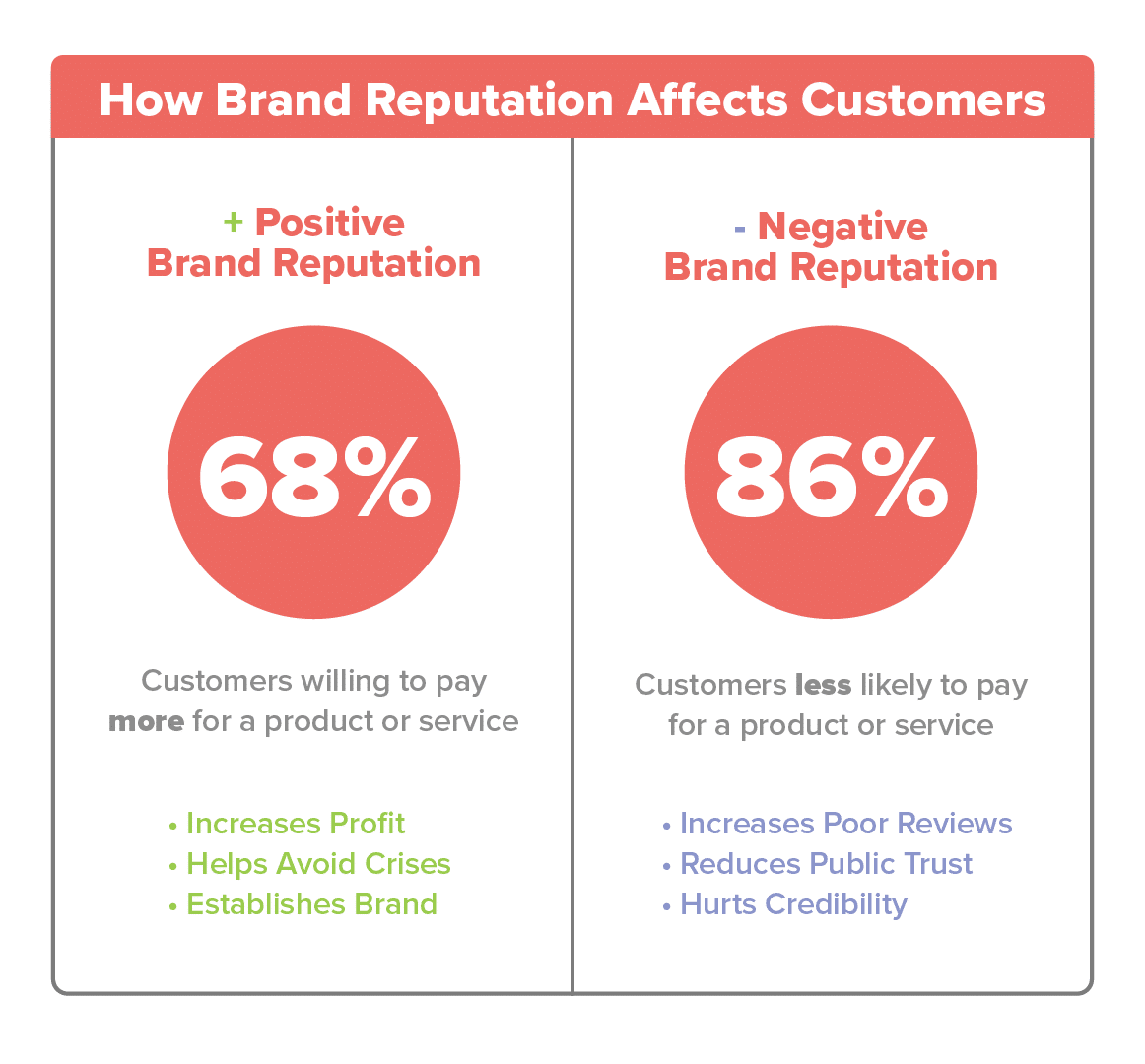
Your reputation is one of your brand’s most important assets, and a positive reputation can help increase profit, avert public crises and establish your company as a key industry expert.
68% of customers are willing to pay more for the same product or service if a business has a positive reputation.
On the flip side, a negative brand reputation can erode public trust and credibility. 86% of customers are hesitant to pay for a product or service if they see poor reviews — demonstrating just how much perception influences purchasing decisions.
How Do You Create a Reputation Management Plan?
Follow these steps to write a brand reputation management plan with your team or with the help of a crisis management PR firm:
- Conduct a Reputation Audit: Assess your current reputation to identify vulnerabilities and opportunities. This kind of proactive brand reputation management allows you to address weak spots over time.
- Frame Your Narrative: Align your messaging with your brand’s vision and values across all channels and touchpoints.
- Monitor Continuously: Track your brand in real time across online and offline channels. Use social listening tools to monitor mentions and sentiment, set up news alerts and actively solicit and respond to customer reviews to stay informed and address issues quickly.
- Optimize Your Online Presence: Make sure positive content about your brand ranks higher than negative or misleading information in search results through strategic SEO efforts.
What Is Crisis Communication?
Crisis communication is the process of responding strategically to a current crisis — or, as a more recent PR trend, creating a proactive plan to prepare for potential future ones.
In public relations, a crisis refers to any event or situation that threatens to damage your brand’s reputation. Beyond loss of public trust, a crisis can harm anyone involved in your organization — including employees, customers and stakeholders. It can result in intense public scrutiny, media pressure to respond quickly and loss of control over your brand’s narrative.
Why Is Crisis Communication Important?
While brand reputation management helps lay the groundwork, crisis PR protects both your brand’s reputation and your bottom line during high-stakes moments. Without a crisis communication strategy, brands often struggle to control the narrative, leading to extended negative coverage, eroded trust and avoidable revenue losses.
Organizations that prepare for crises are far more likely to weather them successfully. 98% of business leaders who have used their crisis communication plan say it was effective, and having a plan in place can reduce potential revenue losses by 30% compared to going without one.
How Do You Create a Crisis Communication Plan?
Whether you’re creating a plan from scratch or updating an existing one, start by designating roles, responsibilities and objectives. Your crisis communication strategy should include draft news releases and social media posts, as well as a crisis communication checklist for various scenarios. Consider partnering with a crisis PR firm to develop your plan and train your organization.
Once your plan is in place, practice it regularly using realistic crisis scenarios. This preparation helps your team know how to execute the plan under pressure and identify gaps before a real crisis occurs.
As you build and practice your crisis communication plan, focus on these three phases:
- Pre-Crisis: Conduct a risk assessment to identify warning signs and plan ways to minimize them.
- Crisis Response: Take immediate action to control the narrative and address the crisis in real time.
- Post-Crisis: Review your response and identify lessons learned for future scenarios.
How Do Crisis PR & Brand Reputation Management Work Together?
Together, brand reputation management and crisis communication form a unified strategy that keeps you in control of your brand’s story across online and traditional media — both in the moment and over the long term — rather than letting others write it for you.
Strong brand reputation management strategies create a foundation of trust and credibility that becomes essential during a crisis. When your brand has consistently demonstrated its values and built positive relationships with customers and stakeholders, you have goodwill to lean on when challenges arise. Organizations with solid reputations recover faster and experience less damage than those without that foundation.
Meanwhile, your crisis communication plan shouldn’t just sit on a shelf waiting for disaster to strike. The proactive elements of crisis communication — like risk assessments, monitoring systems and prepared responses — actually strengthen your everyday reputation by helping you spot and address issues before they grow into larger problems.
Protect Your Brand with Expert Reputation & Crisis Communication Management
Whether you need to establish your brand’s credibility, protect your search visibility or prepare for potential crises, Lukas Partners’ team of PR experts can help. We’ll develop customized strategies for both brand reputation management and crisis communication management so you’re ready for whatever comes your way. Get started today!