

Media interviews aren’t just about answering questions — they’re opportunities to shape your brand’s narrative and build credibility. Whether you’re sitting down for a TV segment, news conference, virtual interview or podcast, media training for spokespeople and executives starts with knowing what questions to expect so you can avoid common media interview mistakes and deliver strong responses. Here are the key types of questions reporters ask and how to prepare answers that are clear, confident and on-brand.
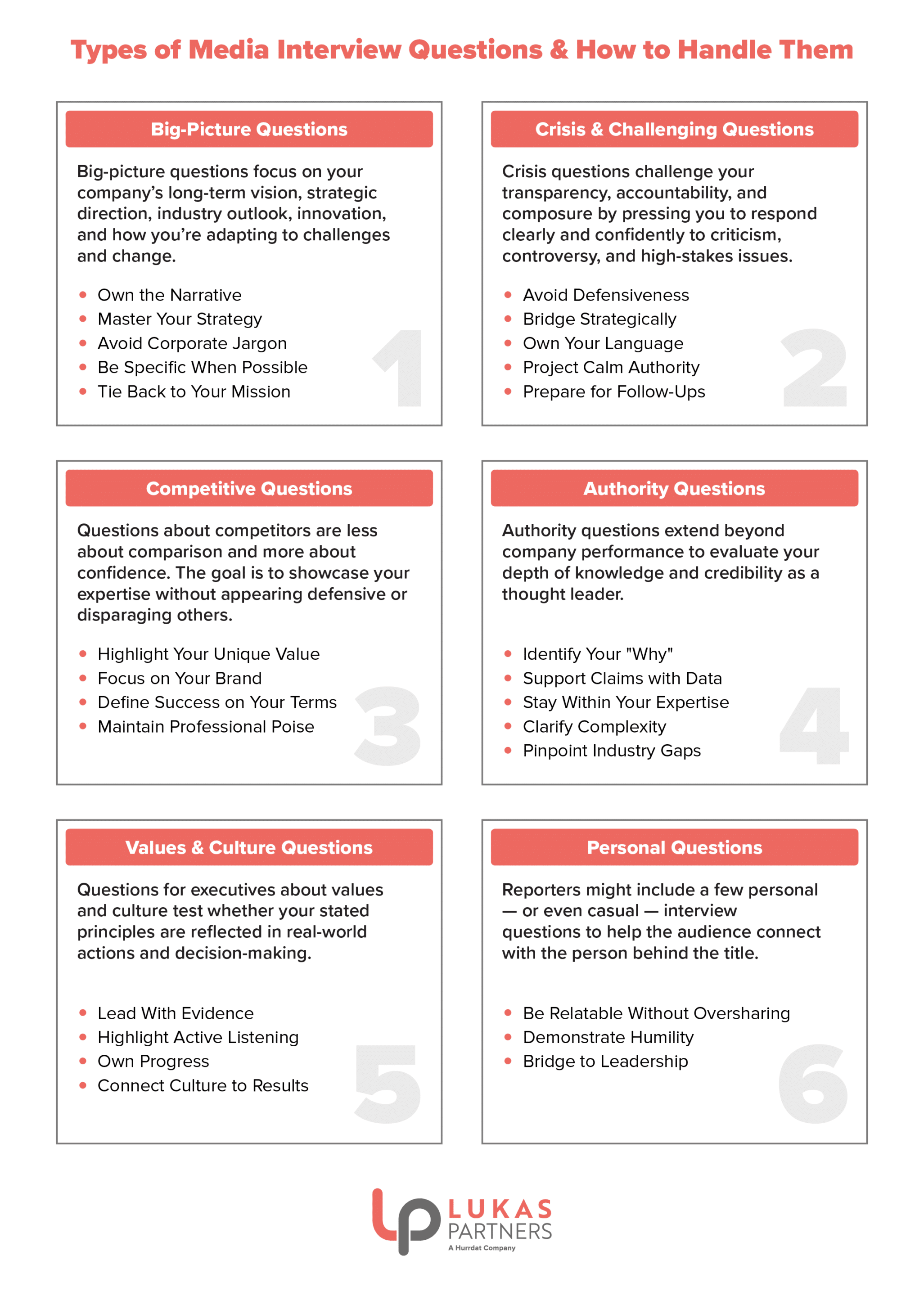
- Big-Picture Questions
- Crisis & Challenging Questions
- Competitive Questions
- Authority Questions
- Values & Culture Questions
- Personal Questions
Big-Picture Questions
Reporter questions about the big picture provide an opportunity to demonstrate your brand’s impact and innovation. They also allow you to position your company within the industry and discuss your vision for the future.
Designed to uncover the larger narrative, some big-picture questions journalists ask include:
- What are your organization’s goals for the next five to ten years, and how will you achieve them?
- What are you going to do differently from your predecessor?
- What is the next big thing for your brand?
- How does [recent decision] align with your overall strategy?
- Where do you see [industry] going in the next five to ten years?
- What is the biggest challenge facing [industry] right now, and how are you working to solve it?
- How do you feel about the use of AI in [industry]? Are you incorporating AI, and how?
- How are you adapting to [change in industry]?
How to Prepare for Big-Picture Questions
Responses to big-picture questions need to showcase strategic thinking and proactive leadership. Keep these media interview tips in mind:
These PR challenges sound familiar?
Let's explore how strategic communication can move your business forward.
Schedule a Consultation- Own the Narrative: Demonstrate control and direction by speaking with confidence about where the organization is headed.
- Master Your Strategy: Clearly articulate your primary goals and the specific steps you’ll take to reach them. When discussing a predecessor, explain how you will move the company forward without belittling the past.
- Avoid Corporate Jargon: Use simple, conversational language. Speaking in corporate jargon disconnects you from your audience and creates barriers to understanding.
- Be Specific When Possible: Vague or reactive answers suggest a lack of readiness. Be concise and give real-world examples to showcase confidence and authority.
- Tie Back to Your Mission: Drawing connections between current events or industry trends and your organization’s core values demonstrates principle and consistency.
Crisis & Challenging Questions
Crisis or challenging questions — sometimes framed as “gotcha” moments — test your composure, transparency and accountability. These high-stakes moments especially benefit from media training for executives and practice with an experienced media training partner.
During your media interview preparation, think about how you’d respond to these difficult questions:
- Critics say [negative claim]. What’s your response?
- There have been reports of [layoffs, lawsuits or other controversy]. Can you clarify the situation?
- What do you say to the customers affected by [issue]?
- Why did it take so long to respond to [issue]?
- Can you guarantee [issue] won’t happen again?
- How do you justify [issue]?
- What is the worst-case scenario if this plan fails?
- What is the organization’s position on [relevant controversial topic]?
How to Prepare for Crisis & Challenging Questions
High-stakes questions demand calm, confident leadership under pressure. To protect your narrative, be sure to have an up-to-date crisis communication plan and prioritize these strategies:
- Avoid Defensiveness: Defensiveness can lose the audience’s trust. Address challenges directly and take accountability while reframing setbacks within a broader, more constructive narrative.
- Bridge Strategically: Acknowledge the concern, then redirect to what matters most. When faced with “what-if” hypotheticals, adopt a positive, active stance and pivot back to your key messages.
- Own Your Language: Be careful not to let a reporter put words in your mouth. Instead, politely restate your position using terms that more accurately reflect your beliefs and goals.
- Project Calm Authority: In difficult moments, lead with empathy and accountability. Positioning the organization as prepared and proactive signals strong leadership.
- Prepare for Follow-Ups: Reporters often probe deeper with “Can you give a specific example?” or “What do you mean by that?” Have concrete details ready and practice expanding on your key points without contradicting yourself or appearing evasive.
Competitive Questions
Questions about competitors are less about comparison and more about confidence. The goal is to showcase your expertise without appearing defensive or disparaging others.
Questions about your competition could include:
- Competitors are doing [X]. Why aren’t you?
- How do you plan to compete with [competitor product]?
- What sets your company apart from competitors?
- Why are you confident you can win against [competitor]?
How to Prepare for Competitive Questions
To effectively handle questions about the competitive landscape, it’s important to be poised and respectful while also demonstrating why your strategy is the best choice. Consider these tips:
- Highlight Your Unique Value: Focus on what sets your approach apart and how you intend to lead the market rather than chase it.
- Focus on Your Brand: Shift the conversation away from what others are doing. Briefly acknowledging a competitor’s move before bridging back to your own strengths shows confidence and prevents you from sounding dismissive.
- Define Success on Your Terms: Stay mission-driven. This shows you are guided by customer needs and core values rather than peer pressure.
- Maintain Professional Poise: Respectful commentary about competitors and the industry at large reinforces your credibility.
Authority Questions
Authority questions extend beyond company performance to evaluate your depth of knowledge and credibility as a thought leader.
Media interview questions for leadership can include:
- How does your approach differ from the industry standard?
- What is most misunderstood about your industry?
- Which emerging trends are distractions, and which are true game-changers?
- What do you see as the biggest untapped opportunity in the market?
How to Prepare for Authority Questions
When preparing for a media interview, consider these strategies to solidify your status as a thought leader:
- Identify Your “Why”: Being able to clearly articulate the logic behind your approach shows your strategy is built on conviction.
- Support Claims with Data: Back your positions with recent data, case studies, or industry developments to demonstrate informed authority rather than opinion.
- Stay Within Your Expertise: Don’t speculate on anything outside your area of knowledge to avoid appearing misguided or unprepared.
- Clarify Complexity: Simple explanations demonstrate mastery. Show off your depth of knowledge by educating your audience.
- Pinpoint Industry Gaps: Identifying untapped opportunities demonstrates high-level foresight and positions you as an authority.
Values & Culture Questions
Questions for executives about values and culture test whether your stated principles are reflected in real-world actions and decision-making.
To evaluate your brand’s integrity and authenticity, reporters may ask questions like:
- How do you ensure ethical decision-making across all levels of the organization?
- How do you respond to employee concerns?
How to Prepare for Values & Culture Questions
These press interview questions are an invitation to showcase how day-to-day actions align with your company values. Prepare with the following tips:
- Lead With Evidence: Give specific examples to display how your values are a lived reality rather than just a slogan.
- Highlight Active Listening: Describe how feedback influences action to demonstrate responsive leadership.
- Own Progress: Credibility comes from honesty, not perfection. Admit where you’re still growing while outlining a clear plan for improvement.
- Connect Culture to Results: Explain how values drive performance. This positions your values as a strategic priority rather than an afterthought.
Personal Questions
Reporters might include a few personal — or even casual — interview questions to help the audience connect with the person behind the title.
Personal questions in a media interview range widely, but might include:
- How would you describe your leadership style?
- Why are you the right person to lead this organization?
- What shaped your career path?
- What motivates you outside of work?
- What books or podcasts influence your thinking?
How to Prepare for Personal Questions
While these questions may feel less formal, they can still shape the narrative. Here are some ways to thoughtfully respond to personal questions:
- Be Relatable Without Oversharing: Share a humanizing detail to showcase approachability, but speak professionally to maintain credibility and authority.
- Demonstrate Humility: Acknowledging the mentors or experiences that shaped you shows you are grounded, while subtly reminding the audience of the path you’ve traveled to gain your expertise.
- Bridge to Leadership: Tie personal insights to your brand’s key messages or broader vision to highlight your personal and professional commitment to the organization.
Strengthen Your Media Interview Skills
Own the narrative and protect your reputation with PR services from Lukas Partners. Our media training services — from media interview coaching to crisis media training — equip leaders and spokespeople to handle every interview with confidence, clarity and control. Get in touch with our PR team today!