
Media interviews are high-stakes opportunities to shape your brand’s narrative — but common errors can derail a spokesperson or executive. Knowing what to do and what not to do in a media interview helps you stay on message and protect your credibility. Here are the most common media interview mistakes and how to avoid them.
- Mistake 1: Not Having a Defined Communication Goal
- Mistake 2: Winging Your Media Interview
- Mistake 3: Giving Long, Rambling Answers
- Mistake 4: Looking & Sounding Flat or Awkward
- Mistake 5: Using Industry Jargon
- Mistake 6: Trying to Be Funny
- Mistake 7: Treating the Interview Like a Sales Pitch
- Mistake 8: Giving Non-Answers or Saying “No Comment”
- Mistake 9: Going “Off the Record”
- Mistake 10: Controlling the Story

Mistake 1: Not Having a Defined Communication Goal
If you don’t know why you’re doing an interview, that’ll lead to unclear messaging and a knock to your credibility and mission. You also can’t determine whether the interview actually moved the needle for your brand if there’s nothing to measure. Without a clear purpose, the outcome of the interview is left to chance.
Do: Define a Clear Interview Objective
The only way to make a media interview successful is by first clarifying the “why” behind the interview. Define your key message, one or two secondary points and the specific outcomes you hope to see in the resulting coverage. Potential outcomes include:
- Shifting public perception
- Clarifying a misunderstanding
- Establishing authority as an industry thought leader
By identifying your goals in advance, you and your team can pressure-test your talking points to ensure they align with your broader mission. This proactive approach transforms the interview from a reactive Q&A into a deliberate tool for advancing larger organizational goals.
These PR challenges sound familiar?
Let's explore how strategic communication can move your business forward.
Schedule a ConsultationMistake 2: Winging Your Media Interview
The biggest interview mistake spokespeople and executives make is assuming that, because they are good public speakers or are subject-matter experts, they can “wing” a media interview. But journalists are looking for a specific angle or “hook.” Without preparing for a media interview, you are likely to be led toward their narrative rather than effectively expressing your own.
Do: Prepare For Your Media Interview
Want to nail your virtual or media interview? Practice, practice, practice. This goes for any format — whether it’s a regular broadcast, phone, podcast, radio or TV interview. Media interview training helps executives build the baseline skills, but preparation is what applies them to a specific conversation.
Media interview preparation should include:
- Researching the journalist, the outlet and the specific audience beforehand so you know how to best speak to them.
- Anticipating the journalist’s questions and having clear, actionable key messages for each.
- Conducting a run-through with your PR team or colleagues who can throw curveballs.
- Recording yourself on your phone and watching it back. Are you saying “um” too much or rushing through your answers? Are you fidgeting?
- Practicing again to correct any issues.
Prep builds the muscle memory needed to stay on track under pressure.
Mistake 3: Giving Long, Rambling Answers
In the age of short-form content and soundbites, brevity is king. Long, academic explanations that include too many details can quickly lose your audience’s attention. If your answer lasts longer than 45 seconds, you’re making it difficult for the editor to find a clip, which increases the risk of being misquoted or cut entirely.
Do: Deliver Concise, Quotable Answers
It’s easy to wax poetic when discussing something you’re passionate about, so keep a message-first mindset. Lead with your main point, then back it up with one supporting fact or brief anecdote that your audience will remember. Then, stop talking once you’ve made your point. If the journalist needs more detail, they’ll ask.
Pro media interview tip: If your message is too long and complex to be cut down to 45 seconds, use enumerating language to protect your words from being spliced:
- “This comes down to four factors: One…Two…Three…Four…”
- “There are three parts: First…Second….Third…”
- “Here’s what’s happening, why it matters and what we’re doing about it. What’s happening is….Why it matters is….What we’re doing is…”
- “Step one was….step two was…..”
Mistake 4: Looking & Sounding Flat or Awkward
Flat or awkward delivery in on-camera interviews or live podcast interviews is rarely about a lack of passion and more often about nerves or not knowing better. Some spokespeople clam up, while others overcompensate with a robotic or performative tone. Some have nervous habits like rocking or fidgeting. Others don’t know what to wear that will translate well on camera. Finding a natural balance between how you feel and how you present can be challenging without practice.
Do: Improve On-Camera Interview Skills
For both in-person and remote media interview skills, video yourself during practice or use a microphone to identify verbal tics and patterns. Being expressive and genuine requires a mindful balance of tone, facial expressions and body language — all tailored to the specific interview format. For example:
- TV appearances: Pay attention to eyeline, framing, camera angles, appropriate attire and calm, controlled movements
- Radio, phone and podcast interviews: Smile while you speak to project warmth and tonal variation in your voice
While you should wear neutral or branded colors on TV interviews, avoid wearing all black, all white, or small patterns that do not show well on camera. And in all interview formats, be mindful of technical factors, such as gesturing near a microphone or bumping equipment.
Mistake 5: Using Industry Jargon
Relying on acronyms, “shop talk” or technical terms is a fast way to lose your audience. If the journalist has to stop you to define a term, the flow of your message is broken. If they don’t stop you, the audience may simply tune out because they don’t understand.
Do: Use Simple Language for General Audience
Keep your answers conversational and use analogies and visuals where you can — even if they’re not perfect. Explain your point as you would to someone intelligent but unfamiliar with your field. Replace or define industry-specific terms so they don’t interrupt understanding. If your main points are clear to a layperson, your expertise will come across without alienating listeners or viewers — and your audience will be more likely to retain your message.
Mistake 6: Trying to Be Funny
Forcing humor during a media interview — especially when discussing serious topics or when it’s not natural to your personality — often backfires. A joke that doesn’t land creates awkward tension. One that’s misinterpreted can become a damaging headline. And attempting humor when you’re nervous frequently comes across as deflection or a lack of seriousness about the subject matter.
Do: Stick to the Three C’s of Interviewing
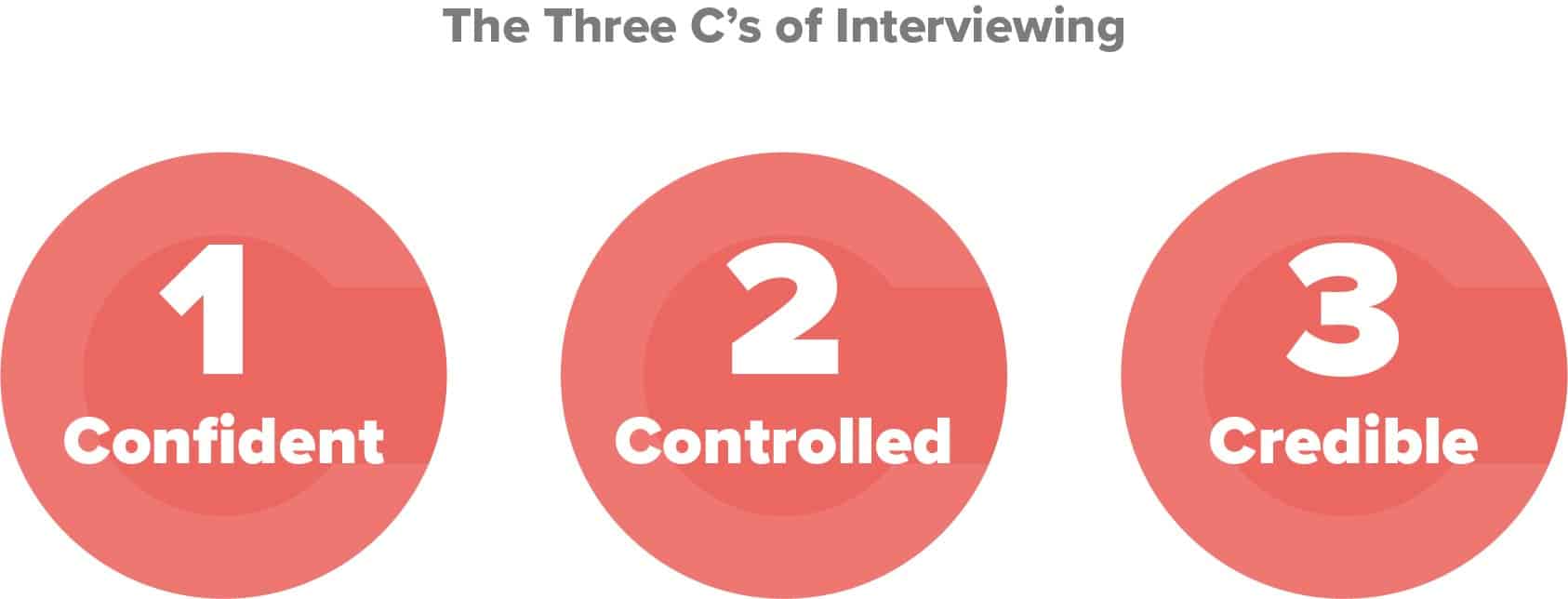
Stay confident, controlled and credible. Let your expertise and preparation speak for itself rather than trying to be entertaining. If humor happens naturally because that’s genuinely who you are, fine, but don’t force it as a strategy to appear likable or relatable.
Your goal is to be a trusted source of information, not the most charismatic person in the room. Journalists and audiences respond to authenticity and substance. Keep your tone professional and your delivery steady.
Mistake 7: Treating the Interview Like a Sales Pitch
Approaching a virtual or media interview as a sales pitch is a common pitfall that can quickly lose listener engagement and damage your long-term credibility with journalists looking for insights, not advertisements. While media interview opportunities certainly provide valuable visibility for your brand, the primary goal should be to demonstrate expertise and thought leadership rather than hard selling.
Do: Be an Expert Without Selling
Approach your answers with data, an anecdote or brief context before attempting to weave in your brand’s narrative. A helpful media interview technique is storytelling. By sharing a real-world example of how a challenge was solved, you naturally showcase your capabilities.
If you find yourself slipping into marketing mode, pause and refocus on the “why” — both in terms of your goals for the interview and why this topic matters to your audience. By prioritizing knowledge exchange, you position yourself as a thought leader, letting your brand’s visibility emerge organically rather than feeling like a forced commercial.
Mistake 8: Giving Non-Answers or Saying “No Comment”
Saying “no comment” in response to a question can make you appear standoffish, uncertain or even guilty. It also creates a vacuum that journalists may fill with speculation or quotes from competitors. Dodging a question or giving vague and overly simplified responses carries similar risks.
Do: Respond to Difficult Questions
Allow yourself time to think so you can provide a clear response that includes real, relatable experiences or a striking statistic.
If you don’t know the answer — or cannot answer due to legal, privacy or confidentiality constraints — acknowledge the question and use bridging techniques to shift focus to what you can discuss. Here are some examples of how to redirect without shutting down a conversation:
- “That’s a fair question, but what’s most important right now is…”
- “I can’t discuss that due to confidentiality/privacy/legal constraints, but what I can share is…”
- “I’ve heard that concern. In my experience, what I’ve found is…”
- “While I can’t speak to those specific details, I can provide this context…”
And never speculate or guess if you don’t have an answer. Avoid hypotheticals and commenting outside your area of expertise. If you should have a response, offer to get back to the reporter with more information once you’ve had time to research the topic further.
Mistake 9: Going “Off the Record”
There is a common — and dangerous — misconception about saying something “off the record” in media interviews. For a comment to truly be off the record, both the interviewer and interviewee must explicitly agree to those terms in advance. Simply declaring a statement “off the record” mid-conversation provides no formal protection or guarantee of confidentiality. In today’s “always-on” media environment, the risks are even greater:
- Even after a Zoom or Teams call appears to have ended, background processes or devices may still be active.
- Journalists may use AI-driven transcription apps that capture every word, including mutters or background noise.
- Many interviews are live-streamed or recorded in a single take, leaving no editing room to save you from a slip of the tongue.
Do: Be Silent
This media interview tip is pretty simple, but easier said than done. If you don’t want to see it as a headline, don’t say it. Assume every microphone is live and every camera is recording from the moment you start prep until you are back in your car or logged off and out of the space.
Mistake 10: Controlling the Story
Attempting to dictate interview terms — like telling a journalist what they can or cannot ask, demanding final approval over questions, insisting on reviewing the story before publication or getting upset about how you’re depicted in the final product — damages your credibility and the working relationship.
Journalists aren’t your PR firm — their job is to write balanced, factual pieces. Your demands only signal a lack of trust or transparency. In many cases, reporters will simply move on to a more cooperative source and tell their friends.
Do: Respect Editorial Independence
Understand that you control your answers, not the questions or the final story. But you can shape perception through strong preparation and clear messaging. If you’re concerned about a specific topic, address it proactively during your prep rather than trying to prohibit it during the interview.
You can ask about the general topics or angle of the interview in advance — this helps you prepare relevant talking points. But once the interview begins, focus on delivering your key messages and staying calm and professional even if questions are aggressively asked to provoke you.
Get Media Interview Training Today
Protect your brand and sharpen your messaging with PR services from Lukas Partners. We offer on-camera interview training for executives and brand spokespeople to help your team approach every media contact with confidence. Connect with our PR experts today!